
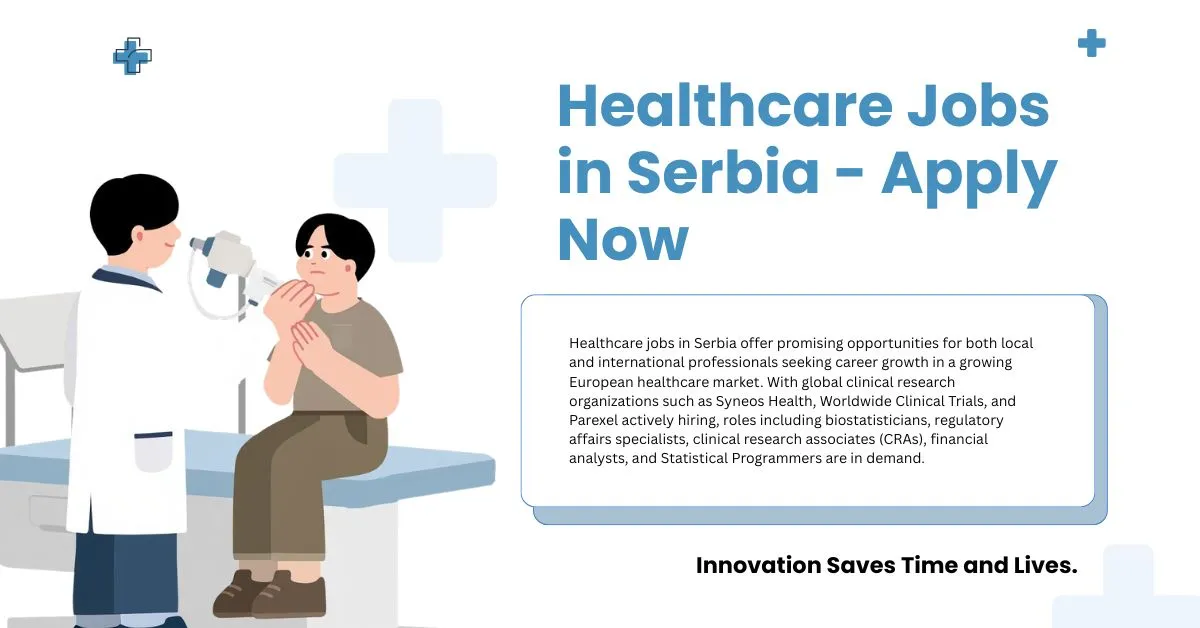
Healthcare jobs in Serbia offer strong opportunities for doctors, nurses, and clinical research professionals due to growing demand in hospitals, CROs, and international healthcare companies. If you’re looking for placements, our [Healthcare Recruitment Services in Serbia] helps connect qualified professionals with verified employers in Belgrade, Novi Sad, and across EU-linked healthcare networks.
Imagine building a stable healthcare career in a country where demand is rising and opportunities are expanding every year. Healthcare professionals in Serbia earn between 65,000 RSD and 626,000 RSD per month, depending on experience and specialization. For many nurses, doctors, and clinical experts, this is more than a job; it’s a chance to grow, earn, and feel valued in a structured healthcare system.
Why are healthcare jobs in Serbia increasing in demand?
Healthcare hiring in Serbia is rising because of clinical research expansion, aging population needs, and outsourcing from global pharmaceutical companies. Cities like Belgrade and Novi Sad are becoming regional hubs for clinical trials, regulatory work, and biostatistics roles.
This growth is driven by international companies such as Syneos Health, Parexel, and Worldwide Clinical Trials, which actively recruit for Serbia-based positions due to cost efficiency and EU regulatory alignment.
What healthcare jobs are available in Serbia?
Healthcare employment in Serbia is not limited to hospitals. A large share of roles comes from clinical research and pharmaceutical support organizations.
Clinical research and pharma roles
- Financial Analyst – Syneos Health
- Principal Biostatistician – Syneos Health
- Junior Statistical Programmer – Worldwide Clinical Trials
- Regulatory Affairs Specialist (EU roles)
- Contracts Administrative Assistant – Parexel
- IMS Reporting Specialist
Medical and healthcare support roles
- Doctors and specialists in public hospitals
- Nurses in clinical and private facilities
- Pharmacovigilance and quality assurance staff
- Clinical Research Associates (CRA roles)
These positions are heavily concentrated in Belgrade’s business district and Novi Sad’s expanding biotech corridor.
How much do healthcare professionals earn in Serbia?
Salaries in Serbia vary depending on specialization, experience, and whether the role is clinical or research-based.
Average salary overview
- Healthcare sector average: ~209,000 RSD/month
- Doctors: 100,000 – 140,000 RSD/month
- Nurses: 65,000 – 80,000 RSD/month
- Clinical Research Associates (CRA): 92,200 – 161,000 RSD/month
What qualifications are required for healthcare jobs in Serbia?
Education requirements
Most healthcare roles require at least a bachelor’s degree in medicine, nursing, pharmacy, or life sciences. Senior roles in clinical trials often require a master’s degree or specialized certifications.
Experience expectations
- Entry level: 0–2 years (assistants, junior roles)
- Mid level: 2–5 years (CRA, analysts)
- Senior level: 5–10+ years (biostatistics, regulatory leadership)
Certifications that help
- ICH-GCP (Good Clinical Practice)
- Pharmacovigilance certification
- Clinical trial coordination training
- Medical monitoring certifications
How do foreigners get healthcare jobs in Serbia?
Serbia is open to international professionals, especially in clinical research and pharma sectors.
Work visa requirements
Foreign applicants typically need:
- Job offer letter from a Serbian employer
- Valid passport
- Health insurance proof
- Temporary work permit (often up to 180 days for medical licensing cases)
How to find healthcare jobs in Serbia?
Job search channels
- Recruitment agencies (clinical research-focused firms)
- Direct company applications (Syneos Health, Parexel)
- National Employment Service of Serbia
- LinkedIn and EU clinical trial portals
- Expat job communities
Application strategy
Tailor your CV to EU standards and highlight:
- Clinical trial experience
- Regulatory knowledge
- Data analysis or research skills
- Multinational project exposure
What skills are most important for healthcare careers?
Technical skills
- Clinical data management
- Pharmacology knowledge
- Regulatory compliance (EU MDR, EMA guidelines)
- Healthcare software systems
Soft skills
- Communication across multilingual teams
- Critical thinking under pressure
- Time management in clinical trials
- Empathy in patient-facing roles
What makes Serbia attractive for healthcare professionals?
Serbia offers a balance of affordable living, growing research infrastructure, and access to European healthcare markets. Belgrade’s modern hospitals and clinical trial offices near Knez Mihailova Street and Novi Sad’s university hospitals are key employment zones.
Career growth in Serbia’s healthcare sector
Healthcare professionals in Serbia often move into:
- Senior CRA roles
- Biostatistics leadership positions
- Regulatory affairs management
- Clinical operations directors
Continuous learning in clinical trials, EU compliance, and digital health is essential for advancement.
Benefits of healthcare jobs in Serbia
- Growing demand for healthcare professionals
Serbia continues to need nurses, doctors, and medical staff, especially in public hospitals and elderly care facilities in Serbia. - Stable and secure employment
Healthcare is an essential sector, offering long-term job security and consistent employment opportunities. - Competitive salary packages
Salaries vary by institution, with private hospitals and international clinics often offering higher pay and benefits. - Opportunities for foreign healthcare workers
Serbia has openings for qualified international professionals in hospitals and care centers. - Career growth and specialization
Nurses can advance into fields such as intensive care, surgery support, pediatrics, and healthcare administration. - Access to modern medical facilities
Many hospitals are upgrading equipment and infrastructure, improving working conditions. - Opportunities with private clinics and international organizations
Private healthcare providers and NGOs offer structured roles and professional development. - Cultural and regional experience
Working in Serbia provides exposure to Balkan healthcare systems and cultural diversity. - Training and skill development
Healthcare professionals often receive on-the-job training and opportunities for further certification. - Gateway to European healthcare opportunities
Experience in Serbia can support future applications for healthcare roles in other European countries.
Conclusion
Healthcare jobs in Serbia present a strong opportunity for both local and international professionals seeking stability, growth, and competitive salaries. With roles spanning clinical research, nursing, biostatistics, and regulatory affairs, the sector continues to expand and evolve.
What makes Serbia especially appealing is the balance between professional development and income potential. Whether you are starting your career or advancing into senior roles, the healthcare industry here offers a clear path forward supported by continuous demand and structured career progression.
Frequently Asked Questions
What is the average salary for healthcare jobs in Serbia?
The average salary is around 209,000 RSD/month, with clinical research roles often paying more than hospital positions.
Can foreigners work in healthcare in Serbia?
Yes, foreigners can work in Serbia if they meet licensing requirements and secure a valid work permit.
Which companies hire healthcare professionals in Serbia?
Major employers include Syneos Health, Parexel, Worldwide Clinical Trials, and various hospitals and private clinics.
Is Serbia good for clinical research jobs?
Yes, Serbia is becoming a growing hub for clinical trials due to cost efficiency and EU-aligned regulatory systems.